420 Featured Articles
Medical Marijuana ‘Joke’ Comment Leads To Thousands Calling For DEA Chief’s Firing
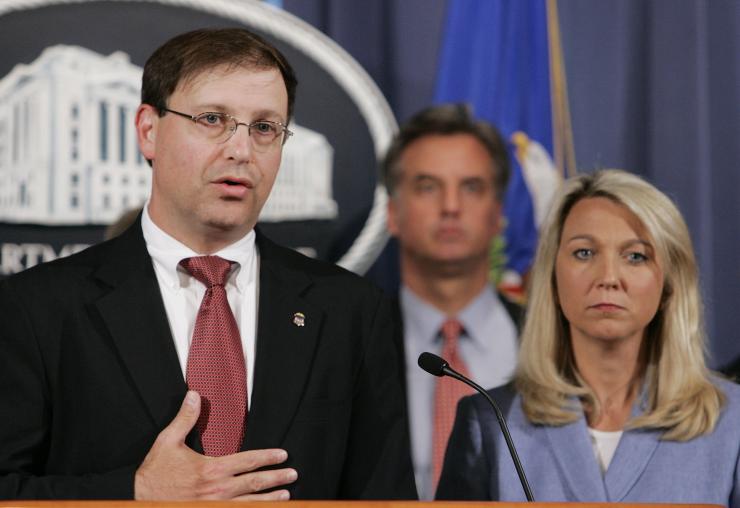
More than 36,000 people had signed a petition as of Friday morning asking President Barack Obama to fire Drug Enforcement Administration head Chuck Rosenberg over comments he made on medical marijuana. Rosenberg said Nov. 4 that smoking marijuana for medicinal purposes “is a joke,” CBS News reported.
“What really bothers me is the notion that marijuana is also medicine, because it’s not,” Rosenberg said, according to CBS News. “We can have an intellectually honest debate about whether we should legalize something that is bad and dangerous, but don’t call it medicine — that is a joke.”
The Change.org petition, started by the marijuana reform group Marijuana Majority, stated Rosenberg’s comments went too far and that medical marijuana isn’t a joke for some seriously ill patients who use the drug as prescribed by doctors. “President Obama should fire Chuck Rosenberg and appoint a new DEA administrator who will respect science, medicine, patients and voters,” the petition said.
One of the petition’s supporters, musician Melissa Etheridge, became a proponent of medical marijuana after she began using it following her 2004 breast cancer diagnosis. But Rosenberg, who was named DEA head in May, said that while extracts and components of marijuana have promise medicinally, smoking marijuana has not been shown to be safe or effective medicinally.
As of Nov. 9, 23 states and Washington, D.C., have passed laws allowing for medical marijuana, according to the National Conference of State Legislatures. Some scientists have said medical marijuana has potentially therapeutic value for pain relief. Some studies have also indicated marijuana can relieve symptoms of cancer and HIV/AIDS.
A DEA spokesperson tried to clarify Rosenberg’s remarks, saying that Rosenberg indicated marijuana should be scrutinized at the same level as other substances intended for medical use, according to the Washington Post. The spokesperson said the DEA supports researching the potential uses of medical marijuana.
*Editor’s Note – You can sign the official petition here!
News Moderator: Jacob Redmond 420 MAGAZINE ®
Full Article: Medical Marijuana ‘Joke’ Comment Leads To Thousands Calling For DEA Chief’s Firing
Author: Adam Lidgett
Contact: IBT Feedback
Photo Credit: Reuters
Website: International Business Times
Bernie Sanders Introduces Bill Ending The Federal Ban On Marijuana
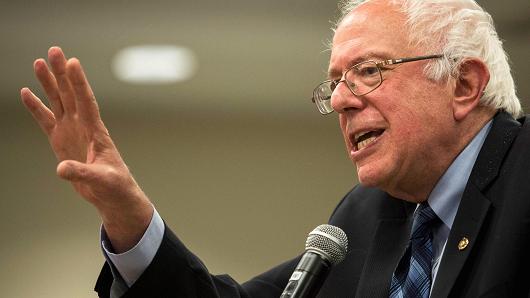
Sen. Bernie Sanders (I-Vt.) has introduced a bill that would end federal prohibition of marijuana, marking the latest move the Democratic presidential candidate has made toward ending the war on drugs.
The Ending Federal Marijuana Prohibition Act, introduced Wednesday, is modeled after a bill first proposed by Rep. Jared Polis (D-Colo.) in 2013, which was reintroduced this year as the Regulate Marijuana Like Alcohol Act. The Senate bill would remove marijuana from the Drug Enforcement Administration’s list of the “most dangerous” drugs and strike marijuana from the Controlled Substances Act, allowing states to decide whether they want to legalize pot for recreational or medical use without federal intervention.
“Just as alcohol prohibition failed in the 1920s, it’s clear marijuana prohibition is failing today,” Polis said in a statement. “For decades, the federal ban on marijuana has wasted tax dollars, impeded our criminal justice system, lined the pockets of drug cartels, and trampled on states’ ability to set their own public health laws. … Today’s introduction of the Ending Federal Marijuana Prohibition Act in the Senate is a huge step forward in the movement to enact the commonsense drug laws needed to grow our economy and restore fairness to our justice system.”
The bill comes a week after Sanders first proposed reclassifying marijuana as a less-dangerous substance, arguing that doing so is an essential component of reforming America’s criminal justice system.
“In the United States we have 2.2 million people in jail today, more than any other country. And we’re spending about $80 billion a year to lock people up. We need major changes in our criminal justice system – including changes in drug laws,” Sanders said at George Mason University on Oct. 28. “Too many Americans have seen their lives destroyed because they have criminal records as a result of marijuana use. That’s wrong. That has got to change.”
Sanders’ bill differs slightly from the House version, which also includes structures for regulating marijuana. Polis’ bill would transfer the DEA’s authority over marijuana to the Bureau of Alcohol, Tobacco, Firearms and Explosives, and would amend federal alcohol laws to include provisions for importing and shipping marijuana as well as other commerce-related regulations. The Senate version of the bill does not include these provisions.
The legislation garnered praise from legalization advocacy groups.
“This is the first time a bill to end federal marijuana prohibition has been introduced in the U.S. Senate,” said Tom Angell, chairman of Marijuana Majority. “A growing majority of Americans want states to be able to enact their own marijuana laws without harassment from the DEA, and lawmakers should listen. The introduction of this bill proves that the defeat of the Ohio marijuana monopoly measure that wasn’t widely supported in our movement isn’t doing anything to slow down our national momentum.”
“The science is clear that marijuana is less harmful than alcohol, and that should be reflected in our nation’s marijuana policy,” Marijuana Policy Project’s Mason Tvert said. “Sen. Sanders is simply proposing that we treat marijuana similarly to how we treat alcohol at the federal level, leaving most of the details to the states. It is a commonsense proposal that is long overdue in the Senate.”
A Gallup poll released last month found 58 percent of Americans are in favor of legalizing marijuana use.
News Moderator: Jacob Redmond 420 MAGAZINE ®
Full Article: Bernie Sanders Introduces Bill Ending The Federal Ban On Marijuana
Author: Mollie Reilly
Contact: Contact Page
Photo Credit: CNBC News
Website: The Huffington Post
On Ballot, Ohio Grapples With Specter Of Marijuana Monopoly
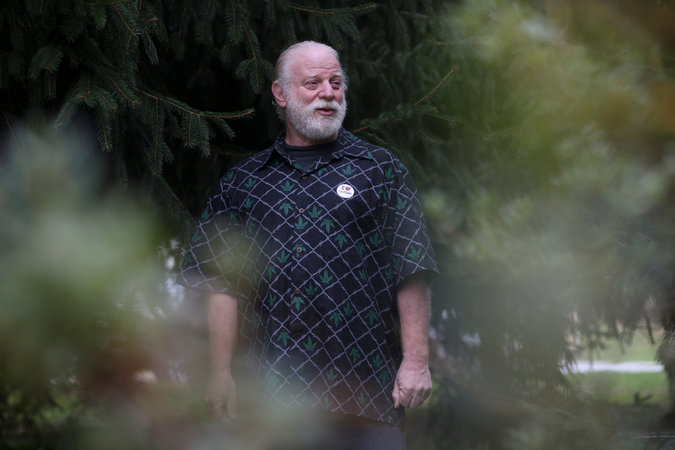
As a member of the International Cannabinoid Research Society, a collector of antique marijuana apothecary jars, the founder of an industrial hemp business and “a pot smoker consistently for 47 years,” Don Wirtshafter, an Ohio lawyer, has fought for decades to make marijuana legal, calling it “my life’s work.”
But when Ohio voters go to the polls Tuesday to consider a constitutional amendment to allow marijuana for both medical and personal use, Mr. Wirtshafter will vote against it.
Issue 3, as the proposed amendment is known, is bankrolled by wealthy investors spending nearly $25 million to put it on the ballot and sell it to voters. If it passes, they would have exclusive rights to growing commercial marijuana in Ohio. The proposal has a strange bedfellows coalition of opponents: law enforcement officers worried about crime, doctors worried about children’s health, state lawmakers, and others who warn that it would enshrine a monopoly in the Ohio Constitution.
The result has been one of the nation’s oddest legalization campaigns, a battle that pits a new generation of corporate investors against grass-roots advocates like Mr. Wirtshafter, who deplores “opportunists seeking monopolistic gains” and laments that America would have been much better off “if they would have just let the hippies have their weed.”
A recent poll by the University of Akron shows voters evenly split, but if the proposal passes, Ohio would be the first state to approve marijuana for personal use without first legalizing medical marijuana. That would put Ohio, a swing state, at the forefront of the national movement to overhaul marijuana laws — just in time for the 2016 presidential campaign. Gov. John R. Kasich of Ohio, a Republican candidate for president, opposes Issue 3.
“If Ohio wins, it will be a significant step forward for the broader movement — nothing will excite attention like that,” said Ethan Nadelmann, executive director of the Drug Policy Alliance in Washington, which has helped lead the national drive for legalization. But his group is remaining neutral rather than endorsing Issue 3, he said, “because of the problematic oligopoly provision.”
To complicate matters, the Ohio General Assembly has put a competing initiative, Issue 2, on the ballot; known as the antimonopoly amendment, it would block Issue 3 by prohibiting the granting of special rights through the state Constitution. There is certain to be a protracted legal battle if both measures pass.
The story of how Issue 3 got onto the ballot begins here in Columbus, the state capital, with a political consultant named Ian James, whose company, The Strategy Network, specializes in gathering signatures for ballot initiatives. In 2009, his firm helped legalize casino gambling in Ohio through a measure that amended the state Constitution and specified where casinos could be located.
Mr. James said he had “taken that premise and applied it to marijuana.” In early 2014, he said, he began meeting with lawyers and a potential investor, James Gould, a Cincinnati sports agent, to talk about a “tightly regulated system” to make marijuana available in Ohio. An organization called the Ohio Rights Group, then represented by Mr. Wirtshafter, was already gathering signatures for an initiative to make medical marijuana legal.
But Mr. James had a more ambitious plan.
With help from Mr. Gould, he found 10 investment groups willing to put up a minimum of $2 million each to finance a campaign to pass an amendment that would legalize marijuana for medical use and personal use in small amounts; set up a commission to regulate it; and designate 10 parcels of land — each owned or optioned by funders of the initiative — where marijuana could be legally grown and cultivated for commercial use.
Adults 21 and older would also be allowed to grow small amounts of marijuana — up to four flowering plants — for themselves. The state commission would license retailers, who would be required to win elections in local precincts.
The backers call themselves ResponsibleOhio. Among the investors: the former professional basketball player Oscar Robertson; the fashion designer Nanette Lepore; Mr. Gould; and two descendants of President William Howard Taft. Each investment group has committed as much as $40 million to build facilities if Issue 3 passes.
Mr. James, whose detractors note that his firm is earning more than $5 million to run ResponsibleOhio, makes no bones about what critics call “the corporatization” of the marijuana business. He said the sale of marijuana would, beginning in 2020, generate $554 million a year in tax revenue for Ohio; 85 percent would go toward safety services and infrastructure repair.
“We have clearly taken this from the tie-dye to the suit-and-tie approach, there is no question about that,” Mr. James said. “Right, wrong or indifferent, this is the way legalization is moving in this country now.”
National advocates are split: The Marijuana Policy Project, like the Drug Policy Alliance, is neutral on Issue 3, while the National Organization for the Reform of Marijuana Laws, or Norml, gave it an uneasy endorsement. Some legalization proponents say Mr. James has created a new model.
“If he is successful with this, a bunch of very rich people will be interested in hiring him to try it in other places,” said Douglas A. Berman, a law professor at Ohio State University who has advised ResponsibleOhio.
Mr. James says he has no plans for other states, though at least five others — including Nevada and California — are expected to have ballot initiatives in 2016.
Outraged lawmakers in Ohio’s Republican-controlled legislature, unwilling to cede control over drug policy, responded with Issue 2, which passed the House with bipartisan backing and the Senate along party lines. State Representative Michael F. Curtin, a Democrat and former editor of The Columbus Dispatch, helped draft the measure, and is a driving force behind Ohioans Against Marijuana Monopolies, the opponents’ coalition.
He calls Issue 3 “a prostitution of the initiative process.”
ResponsibleOhio is making its case to voters on the airwaves (Mr. James said his group would spend as much as $9 million on radio and television ads); with celebrity endorsements (Montel Williams, the talk show host who touts medicinal marijuana as treatment for his multiple sclerosis, was here this week); and paid canvassers who, Mr. James said, will have knocked on one million doors by Election Day.
But perhaps the group’s most contentious marketing effort has been Buddie, an anthropomorphic marijuana bud who looks a bit like a spear of asparagus wearing green cowboy boots and a blue cape, and who has been turning up on college campuses around the state. Critics liken him to Joe Camel, the cartoon character accused of marketing Camel cigarettes to children.
On the campus of the University of Cincinnati on Thursday, Buddie posed for photos and found no shortage of fans among students; most eagerly accepted free T-shirts (with messages like “O-High-O”). Many who stopped were passionate about legalization; others said it mattered little to them; and one, Lee Idoine, told campaign workers who accompanied Buddie that he “worried about the big businesses getting edge on the market right away.”
Mr. Wirtshafter, who practices law in Athens, Ohio, but resigned as the lawyer for the Ohio Rights Group after it endorsed Issue 3, said Buddie proved “how little the organizers of Issue 3 knew about cannabis, its politics and its users.” Mr. Wirtshafter is now active with a new group, Legalize Ohio 2016, which plans its own ballot initiative next year.
On Saturday, he planned to attend a Halloween celebration with a mascot of his own: “Monopoly Man.”
News Moderator: Jacob Redmond 420 MAGAZINE ®
Full Article: On Ballot, Ohio Grapples With Specter Of Marijuana Monopoly
Author: Mitch Smith and Cheryl Gay Stolberg
Contact: Email The NYT
Photo Credit: Andrew Spear for The New York Times
Website: New York Times
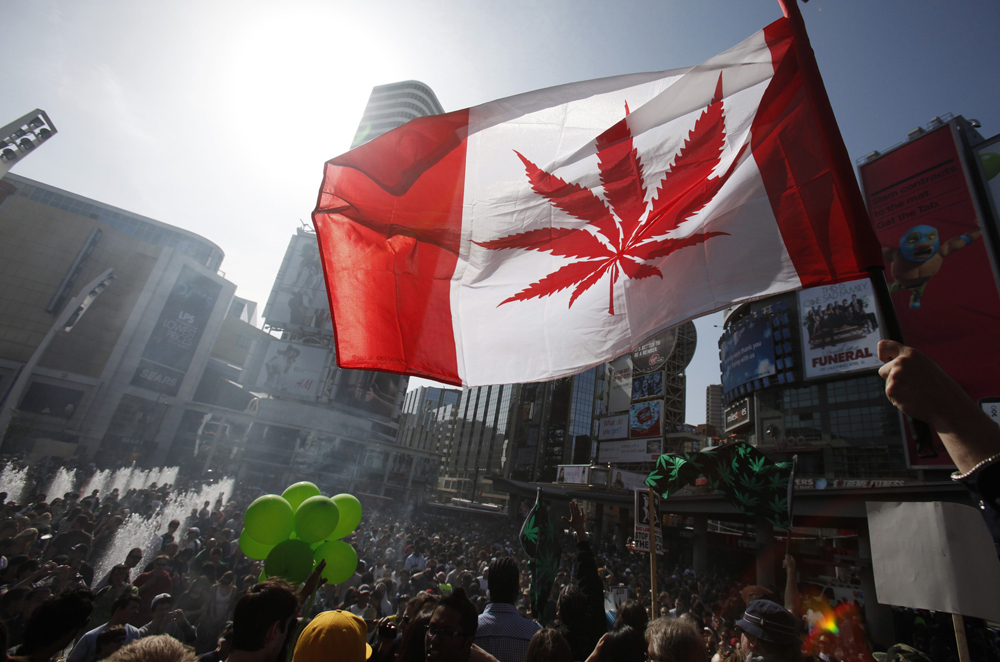
Canada’s New Prime Minister Promises To Legalize Marijuana
Justin Trudeau’s Liberal party clinched a decisive victory in the country’s election Monday, with a pledge to legalize the substance among his policy promises.
Legalization and regulation of marijuana would significantly increase the markets available to licensed marijuana growers.
There are approximately 35,000 to 40,000 patients enrolled in Canada’s medical marijuana program and the current market size is estimated at $80 million to $100 million, as reported by the Financial Post.
“We will legalize, regulate, and restrict access to marijuana”, reads the Liberals’ website. It does not prevent young people from using marijuana and too many Canadians end up with criminal records for possessing small amounts of the drug. Canopy Growth’s CEO, Bruce Linton stated that the government has most likely identified that it can shape the marijuana industry into a legal business that can provide taxes.
Now that the country has joined the list of nations that are open-minded about marijuana legalization, more questions are rising about the structure of the Canadian marijuana reforms.
The changing of the guard in Ottawa could result in recreational access to the drug – a move that would fuel rapid growth in Canada’s burgeoning cannabis industry.
One estimate from ArcView Group previous year said the U.S.’s legal marijuana industry is set to skyrocket, from $1.8 billion in wholesale and retail trade in 2013 to $10.2 billion by 2018.
The professor added that, “Marijuana is a very well tolerated drug without the side effects that we see in other drugs like opioids”, which has been used more and more over the years by Canadians, causing a rise in related deaths.
The Guardian noted that legalizing marijuana had been a key issue of Trudeau’s electoral campaign, as he promised to legalize cannabis “right away”.
Medical marijuana stocks soared Tuesday as Justin Trudeau’s Liberal Party swept to power in Canada’s federal election, according to the Toronto Star.
“To ensure that we keep marijuana out of the hands of children, and the profits out of the hands of criminals, we will legalise, regulate, and restrict access to marijuana”.
News Moderator: Jacob Redmond 420 MAGAZINE ®
Full Article: Canada’s New Prime Minister Promises To Legalize Marijuana
Author: Ross Houston
Contact: Contact The Gazette
Photo Credit: None Found
Website: The Fleming Gazette
Australia: Government Announces Medical Marijuana Legalization Plan
Health Minister Sussan Ley said the Government wants to give people suffering from debilitating illnesses access to the most effective medical treatments.
She said she had been moved by stories of people who got some relief from medicinal cannabis, sometimes legally imported but not always.
“I have heard stories of patients who have resorted to illegal methods of obtaining cannabis and I have felt for them, because with a terminal condition, the most important thing is quality of life and relief of pain,” she told AM.
“And we know that many people are calling out for medicinal cannabis.
“It is important therefore that we recognise those calls for help, that we put in place what we know will support a safe, legal and sustainable supply of a product.”
The Government intends to amend the Narcotic Drugs Act to allow cannabis to be grown for medicine or science and ensure that Australia is not in breach of international drug treaties.
Ms Ley said it would allow cultivation similar to the way Tasmania has grown opium poppies for the world’s morphine market.
She said it is possible a medicinal cannabis industry could flourish.
“It is, and that is something that some state governments I am sure will be interested in,” Ms Ley said.
“You can import the product from overseas, but it is almost impossible because the demand in, for example Europe, is very high and the cost is very high too.
“So I don’t want to place these difficulties in the way of patients who are terminally ill who may be able to get relief from medicinal cannabis.”
Campaign groups cautiously optimistic
Sussan Ley said the legalisation was only about medicinal cannabis not recreational use.
“This is not a debate about legalisation of cannabis. This is not about drugs. This is not a product you smoke. This has nothing to do with that,” she said.
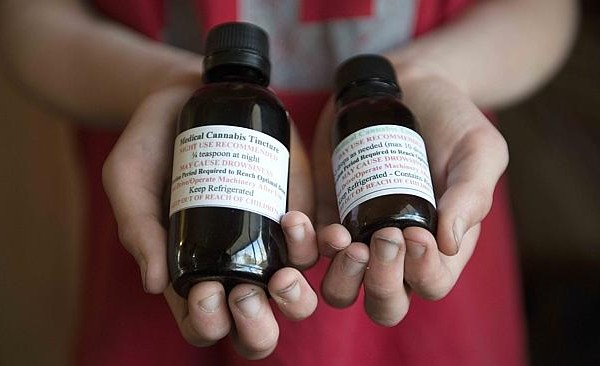
“Most commonly the product is an oil or a tincture that you put on your skin.”
Advocates of medicinal cannabis have cautiously welcomed the Federal Government’s plan to allow the drug to be cultivated.
Lucy Haslem set up campaign group United in Compassion after her son used medicinal cannabis during his battle with terminal cancer.
She said she was grateful that politicians were starting to get onboard but that the devil would be in the detail.
“I hope what they’re announcing today will be meaningful in terms of getting medicine into the hands of patients in a timely fashion,” she said.
“I’m hoping that it will involve some sort of medical amnesty which could happen immediately but I guess I’m waiting to see the finer detail.”
Ms Haslem said she hoped there would be no further delay before patients are able to access the drug legally.
“I hope that medicinal cannabis will be provided from within Australia. I think there’s great scope for the development of a new industry,” she said.
“I hope that patients with numerous serious illnesses and conditions have access to it … I hope that we’re not waiting another year or two for this to be set in motion.”
Opposition pushing for nationwide scheme
The Federal Opposition has also announced it would move to legalise medicinal cannabis.
But while the Government will leave it up to the states to decide if they want to allow the drug to be grown, the shadow assistant Health Minister, Stephen Jones, said Labor would have a nationally consistent scheme.
“A truly national scheme to make medicinal cannabis available,” Mr Jones said.
“It should not be a matter of whether you live in New South Wales or Victoria or somewhere else in Australia.
“If you are suffering from a terminal, if your child has drug resistant epilepsy suffering from life threatening fits, then you should have available to you through medical advice and appropriate channels, medicinal cannabis.”
Several states have already announced clinical trials for medicinal cannabis, but until the change is made they have not been able to legally grow the crop.
The NSW Government has committed $9 million for clinical trials and up to $12 million to set up a Centre for Medicinal Cannabis Research and Innovation.
News Moderator: Jacob Redmond 420 MAGAZINE ®
Full Article: Government Announces Medical Marijuana Legalization Plan
Author: Louise Yaxley
Contact: Contact Page
Photo Credit: None Found
Website: ABC Australia
Oregon’s Recreational Marijuana Sales Haul In $11 Million In First Week
Retailers sold more than $11 million of marijuana during Oregon’s first week of legal recreational sales, outpacing the early business… [Read More]
Will 59 Million More Americans Get Access To Marijuana In 2016?
Marijuana advocates have been gaining momentum in states that have yet to legalize marijuana, but supporters and those interested in… [Read More]
Everything You Need To Know About Recreational Marijuana In Oregon
In less than two weeks, Oregonians — and any one else 21 and older — will be able to walk… [Read More]
Jeff Mizanskey Set Free After Serving 21 Years For Cannabis Arrests
In 1996, Jeff Mizanskey was a dead man, sentenced to life without the possibility of parole because of three felony… [Read More]
How An Unlikely Coalition Of Family, Activists And More Freed Jeff Mizanskey
At 1:30 a.m. on September 1, Jeff Mizanskey woke up in his prison cell at the Jefferson City Correctional Center… [Read More]