Slang Drug Combinations – Candy Flips, Speedballs, and the Secret Language of Mixing
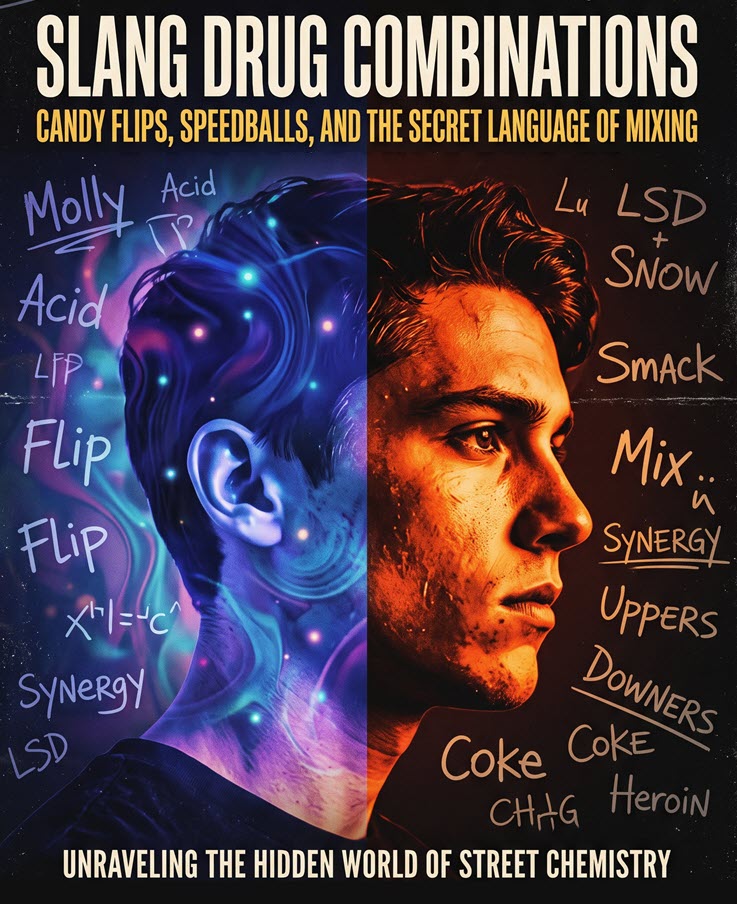
There is a whole parallel dictionary floating around the edges of American drug culture, one that never shows up in the DSM or the DEA’s scheduling tables. It is full of names that sound like they belong on a festival flyer or a comic-book title: candy flip, kitty flip, Jedi flip, speedball, hippie speedball, nexus flip, granny flip. These are not medical terms. They are folk labels invented by people who combine substances and then need a shorthand way to talk about what they just did. The language is inventive, sometimes darkly funny, and remarkably consistent across decades and scenes. It is also a cultural artifact of poly-substance use, the practice of stacking two or more psychoactive drugs in the same session.
That practice is older than the modern drug war and far more common than most public-health messaging admits. It is also, by every serious metric, riskier than using a single substance. This piece is a cultural survey of the slang, not a how-to guide and not an endorsement. The names exist. The combinations exist. The elevated dangers exist. Pretending otherwise does not make anyone safer.
Why the Names Exist
Drug combination slang serves the same purpose as any specialized jargon. It compresses experience into a single phrase that signals both the substances involved and a rough expectation of the qualitative effect. “Candy flip” tells an initiated listener that someone is talking about LSD and MDMA taken close enough together that the effects overlap. “Speedball” classically points to cocaine and heroin, the classic upper-downer pairing that once defined a certain strain of 1970s excess. “Hippie flip” or “flower flip” means mushrooms and MDMA. The pattern is obvious once you see it: many of the more playful names cluster around MDMA, which became the connective tissue of rave and festival culture in the 1990s and has remained there ever since.
The same logic produces darker or more utilitarian labels. “Lean” or “purple drank” is codeine cough syrup mixed with soda. “Wet” or “illy” usually means cannabis dipped in PCP or embalming fluid. “Tranq” has recently attached itself to fentanyl mixed with xylazine. Some names are purely regional or short-lived. Others have stuck for half a century. The Seattle or “hippie” speedball—coffee plus cannabis—is a light, almost domestic version of the same upper-plus-something idea. The language is elastic because the underlying behavior is elastic.
What the slang does not do is convey dose, purity, sequence, or individual vulnerability. Those variables determine whether a given combination is merely intense or actively dangerous. The folk lexicon has always been silent on that point.
Poly-Substance Use Is Common—and More Dangerous
People mix drugs for the same reasons people have always mixed drugs: to intensify a desired effect, to blunt an unwanted one, to stretch a limited supply, or simply because the substances were available at the same time. A joint after the peak of a psychedelic experience is a classic “ride it out” move in some circles. An MDMA user adding ketamine or a dissociative is looking for a different texture of dissociation. A stimulant user adding an opioid is chasing the classic speedball push-pull. None of this is new. What has changed is the chemical landscape. Higher-potency cannabis, novel research chemicals, fentanyl-contaminated supplies, and the sheer variety of available substances have made interactions harder to predict.
The epidemiological picture is unambiguous. A large share of fatal overdoses involve more than one substance. Opioid deaths frequently include stimulants, benzodiazepines, or alcohol. Stimulant toxicity is worsened by other cardiovascular stressors. Combining CNS depressants multiplies respiratory risk. Psychedelics plus stimulants or dissociatives can produce psychological states that are harder to navigate and more likely to end in emergency-room visits. Poly-substance use also complicates treatment: naloxone may reverse an opioid component while leaving a stimulant or sedative component untouched, and clinical presentation becomes harder to read.
Addiction risk compounds as well. Dependence on one substance does not protect against dependence on another; it often accelerates it. The 2025 SAMHSA data that showed cannabis use disorder numbers approaching nicotine dependence numbers also sits inside a broader pattern of concurrent use. People who meet criteria for one substance use disorder are disproportionately likely to meet criteria for another.
There is no controlled, medical literature that establishes safe dosing protocols for most of these recreational combinations. The combinations themselves are usually illegal, the street products are of unknown purity, and individual responses vary widely by age, body weight, prior exposure, mental-health history, and concurrent medications. That is not a theoretical concern. It is the practical reality that emergency physicians and medical examiners document every week.
Why This Piece Does Not Recommend It
The cultural interest in the slang is real. The medical case for casual poly-substance use is not. The absence of a lethal dose for THC alone does not make stacking THC with other drugs risk-free. The existence of accepted medical uses for certain cannabinoids does not extend to unsupervised combinations with dissociatives or stimulants. The fact that nicotine is more lethal at a population level does not make combining it with other substances a smart idea. And the fact that some people report positive subjective experiences does not override the statistical elevation in acute harm and longer-term dependence risk.
Legal risk is not trivial either. Possession of multiple controlled substances can escalate charging decisions. In states that have tightened rules around hemp-derived cannabinoids or novel analogs, an old combination name can suddenly map onto a felony. None of this is abstract for the people who end up in the system.
A cultural piece can acknowledge the creativity of the language without pretending the underlying behavior is benign. The honest position is the same one that applies to any high-risk recreational practice: the more variables you introduce, the less control you have, and the higher the chance that something goes sideways. That is why responsible discussion stops at description and risk awareness rather than technique.
A Working Lexicon
What follows is a curated but extensive list of named combinations drawn from long-standing slang compilations, harm-reduction documentation, and cultural reporting. It is not exhaustive—new terms appear and old ones fade—and definitions can shift by region or scene. It is offered strictly as a cultural reference.
Classic speedball and opioid-stimulant pairings Speedball / powerball / snowball / Belushi / murder one / whiz bang: typically cocaine + heroin (or any stimulant + depressant). Goofball / methball / screwball: methamphetamine + heroin. Frisco special: cocaine + heroin + LSD. Moonrock / eightball / dragon rock: crack + heroin. Tranq / tranq dope: fentanyl + xylazine. Flamethrower / primos: cocaine + heroin laced into a cigarette.
MDMA-centered “flips” Candy flip / candyflipping: LSD + MDMA. Hippie flip / flower flip: psilocybin mushrooms + MDMA. Jedi flip / twilight flip: LSD + MDMA + mushrooms. Kitty flip: ketamine + MDMA. Nexus flip / honey flip: 2C-B + MDMA. Granny flip: LSD + MDMA + 2C-B (often sequenced). Sugar flip: cocaine + MDMA. Love flip: mescaline + MDMA. Trailer flip: methamphetamine + MDMA. Gamma flip: GHB + MDMA. Robo flip: DXM + MDMA. Shaman / time flip: DMT + MDMA. Tipsy flip: alcohol + MDMA. Sextasy: MDMA + sildenafil.
Cannabis combinations Hippie / Seattle / Northwest speedball: cannabis + caffeine. A-bomb / atom bomb / canade: cannabis + heroin or opium. Wet / illy / killer weed / joy stick / lovelies: cannabis + PCP (or embalming fluid). Crack weed / cocoa puffs / primo / oolies / lace: cannabis + crack or powdered cocaine. Candy blunt: cannabis blunt dipped in cough syrup. Jim Jones: cannabis + cocaine + PCP. Black Russian / black hash: hashish + opium.
Other notable named mixes Lean / purple drank / sizzurp / Texas tea: codeine + promethazine (typically with soda). Space / beam me up Scottie: cocaine + PCP. CK1 / Calvin Klein: cocaine + ketamine. Black acid: LSD + PCP. God’s flesh / Soul Bomb: LSD + mushrooms. Void flip: any two dissociatives. Whoonga / Nyaope: heroin (often with antiretrovirals and other adulterants). Ayahuasca / changa: DMT + MAOI-containing plant material. Counter flip / OTC flip: DXM + diphenhydramine.
Many additional regional or short-lived terms exist—banana split, party pack, five-way, Houston cocktail, and others. The pattern is consistent: the name encodes the combination, not the safety profile.
The Bottom Line
The slang of drug combinations is a genuine cultural product—inventive, adaptive, and revealing of how people actually use substances rather than how policy documents imagine they do. It is also a map of elevated risk. Poly-substance use multiplies uncertainty. It increases the chance of acute medical crisis, complicates emergency response, and layers dependence potential. No amount of clever naming changes the underlying pharmacology or the epidemiological data.
A society that wants fewer overdoses and fewer avoidable emergency-room visits has to treat the reality of mixing as a public-health fact rather than a moral panic or a lifestyle accessory. That means accurate information, honest risk communication, and policy that does not pretend single-substance rules will govern multi-substance behavior. It does not mean romanticizing the combinations or treating the slang as an invitation.
The dictionary will keep growing. The risks will not shrink to match it.
Sources
CDC data on drug overdose deaths involving multiple substances; SAMHSA National Survey on Drug Use and Health reports on concurrent substance use and use disorders; Wikipedia “List of polysubstance combinations” and related cultural compilations; PsychonautWiki polysubstance entries; Narconon and similar lexicographic collections of street terms; historical reporting on rave and festival drug culture; peer-reviewed literature on polydrug toxicity and interaction risks.
SLANG WORDS FOR DRUGS, READ ON….
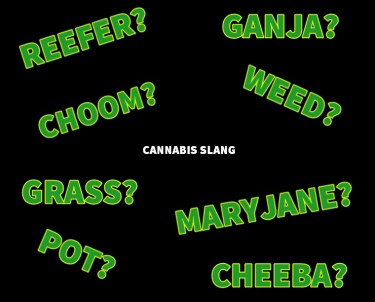
CANNABIS SLANG – WHAT WORDS ARE USED FOR WEED?

Should You Be Feeding Your Cannabis Plants Baker’s Yeast? Here’s What the Science Actually Supports Is the New Cannabis-Cortisol Scare BS Science or BS Journalism?
Comments are currently closed.