Cannabis Facts
Study Shows That Alcohol, Not Cannabis Is The Major “Gateway Drug”
A recent study conducted by researchers at the University of Florida has shown that alcohol is far more of a… [Read More]
Studies Are Showing Weed Could Treat ADHD Better And Safer Than Adderall
It’s no secret that an increasing number of states and cities are decriminalizing, and even legalizing, recreational marijuana use. And… [Read More]
A Recent Study Shows Medical Marijuana Laws Associated With Decreased Obesity
The enactment of statewide laws permitting the use of cannabis for therapeutic purposes is associated with an annual reduction in… [Read More]
Recent Studies Confirm That Medical Marijuana Is Safe For Long Term Use
The debate on medical marijuana has long existed since its legalization. The said debate however is about to end as… [Read More]
Study Says Marijuana Can Improve Vision
A study of children exposed to recreational drugs in the womb has turned up the surprising result that marijuana can improve how they see moving things.
Children exposed to marijuana were 50 percent better at the global motion task – detecting movement of signal dots against the background “noise” of other dots – than children who weren’t exposed, University of Auckland scientists say.
Their study, which looked at 145 four-and-a-half year olds who were exposed to different combinations of methamphetamine, alcohol, nicotine and marijuana before birth, was published in Nature: Scientific Reports this week.
Most studies have investigated how recreational drugs impair motor and cognitive development in children, but the impact on visual areas of the brain is less well understood, says doctoral researcher Arijit Chakraborty.
The 50 percent improvement in the global motion task for children exposed to marijuana in the womb was an unexpected result, he said.
It was found that when mothers drank alcohol alone their children’s motion perception was impaired, but when they consumed both marijuana and alcohol there was no effect – “suggesting that the benefits from marijuana cancelled out the harm from alcohol”.
“This perhaps has implications for preventing some of the effects of Foetal Alcohol Syndrome.”
Prenatal exposure to methamphetamine had no influence on vision.
The majority of the study’s children (81.3 percent) had been exposed to multiple drugs. Twenty-five children (15 percent) had no drug exposure and provided a non-drug exposed control group.
The mothers’ prenatal drug exposure was verified by meconium analysis.
Other visual functions, such as measures of visual acuity were not affected by drug exposure.

News Moderator: Jacob Redmond 420 MAGAZINE ®
Full Article: Study Says Marijuana Can Improve Vision
Author: Web Staff
Contact: Contact Page
Photo Credit: None Found
Website: News 3 New Zealand
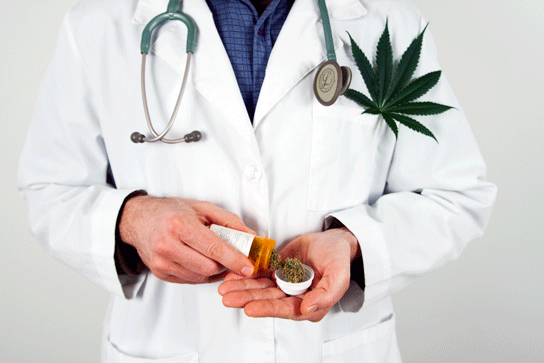
Why Medical Marijuana Makes Sense For Chronic Pain, A Doctor’s View
The explosion of coverage on opioid abuse has been chilling for many chronic pain patients who use opioids responsibly to manage their pain. In many cases, with heightened scrutiny over its merits of use, reduced access becomes an issue.
Many chronic pain sufferers have turned to medical marijuana, which has far fewer side effects than opioids. The problem there is also access. Medical marijuana is only available in 23 states and the District of Columbia and, of course, there are complications because the federal government still deems marijuana illegal so people in the federal health care system (like the VA and Medicare for instance) often can’t get medical marijuana prescribed.
Dr. Gary Witman is an internist and former emergency room physician who now practices in the Fall River location of Canna Care Docs, which are located in several states in the northeast. His practice focuses on opioid replacement therapy – substituting medical marijuana for opioids.
He agreed to share his thoughts with the National Pain Report on the issue of medical marijuana.
National Pain Report: What do you feel is the biggest hurdle?
Dr. Witman: The fact that the DEA has classified medical marijuana as a schedule one agent. Now I am completely opposed to the usage of recreational marijuana. I believe it should be closely monitored by physicians with specific classifications of criteria for which would provide the greatest clinical benefits.
National Pain Report: Why hasn’t Congress changed the rules about medical marijuana?
Dr. Witman: Because I think that people believe that there is a slippery slope, they believe that individuals, who start with medical marijuana, or any marijuana, will want to go to drugs such as cocaine and heroin.
National Pain Report: Do you think the DEA and the federal government’s auxiliary agencies and nongovernmental agencies like American Board of Medical Specialties have a stake in keeping medical marijuana illegal and un-researched?
Dr. Witman: It would be my goal, my wish for the DEA to welcome applications to their agency to perform appropriate clinical trials. Yes they are keeping it illegal right now. I have absolutely no understanding of why they’re keeping it illegal. I mean I think we’re up to 37 states now that allow us to provide this particular drug treatment to a qualified patient population. Hopefully soon it will be 50 states.
National Pain Report: What evidence then is going to be sufficient enough for them to say, ok we know that maybe this not a gateway drug or this is not a slippery slope. Is it anecdotal evidence or is it research that is needed?
Dr. Witman: No, I think that all we’re looking for is the usage of this drug for medical indications. I think that congress, in general, believes that we’re looking for this for recreational usage, and to get high. Remember most strains of medical marijuana right now are CBDs rather than THC. We’re not looking for high THC’s…we’re looking for only those strains which provide medical benefits. And I don’t think that congress has been adequately educated about what forms of medical marijuana physicians are looking or requesting to have legalized.
National Pain Report: Why do you think there has been no serious study on medical marijuana for chronic pain?
Dr. Witman: Because there’s been a lack of funding to provide for the most appropriate clinical trials.
National Pain Report: If there is adequate funding — where would that come from?
Dr. Witman: That would come from the National Institutes of Health
National Pain Report: How are [National Institutes of Health] persuaded then, to start this research?
Dr. Witman: They would need to do a prospective clinical trial, and I have one in mind. It would be in patients with brain tumors. Medical marijuana has been demonstrated in cancer cell lines to cause apoptosis, which is program cell death, plus effects on angiogenesis. It inhibits the production of new blood cells and I think that would be an important clinical trial. And it would demonstrate that it would be no decrease in benefit, in fact, I believe it will improve survival rates for persons with brain cancer.
National Pain Report: Do you think that the research will change people’s minds and is that the only thing that will change their minds?
Dr. Witman: Well, I think that will be the best way, yes. I don’t think anecdotal materials are important. I think that clinical based evidence on a sufficient cohort of subjects is necessary to be able to reach a conclusion.
National Pain Report: Is anecdotal evidence any less factual?
Dr. Witman: Not at all, it just doesn’t provide sufficient, in the subject’s eyes, any statistical…you acquire enough individual with demonstrable clinical benefit before you can say with any medical certainly that something in fact is true.
National Pain Report: do you think the federal government changes and then the states follow?
Dr. Witman: It’s really the south that has been most resistant. In virtually the entire northern portion of the United States have welcomed the introduction of marijuana treatment. but it’s the south that has been most resistant.
National Pain Report: The state of Georgia] spoke of isolating CBD, not use the rest of the plant, and disregard the “entourage effect”…all of the things you probably shouldn’t be doing — trying to synthesize it and replicate its [properties]. I found that astonishing and steeped within the culture of the south and within their own social attitudes against it.
Dr. Witman: First of all, I think you’re in a tough state, Georgia, to be able to move forward very far. I think there is some great resistant in Georgia to provide dispersement of medical marijuana products. If you can get it through in Georgia, God bless you.
News Moderator: Jacob Redmond 420 MAGAZINE ®
Full Article: Why Medical Marijuana Makes Sense For Chronic Pain, A Doctor’s View
Author: Allie Haroutunian
Contact: Contact Page
Photo Credit: None Found
Website: National Pain Report
Here’s Why The Acting DEA Chief Is Wrong On Medical Marijuana
The acting head of the Drug Enforcement Administration claimed that smoking marijuana has “never been shown to be safe or effective as a medicine.” That’s false: though information is limited on the topic, several studies have found smoked marijuana has medical benefits and mostly mild side effects.
Chuck Rosenberg spoke with reporters on the day that the DEA released its 2015 National Drug Threat Assessment. According to CBS News, he said he is bothered by the idea that marijuana is considered medicinal:
Rosenberg, Nov. 4: “What really bothers me is the notion that marijuana is also medicinal — because it’s not. We can have an intellectually honest debate about whether we should legalize something that is bad and dangerous, but don’t call it medicine — that is a joke. …
There are pieces of marijuana — extracts or constituents or component parts — that have great promise. But if you talk about smoking the leaf of marijuana — which is what people are talking about when they talk about medicinal marijuana — it has never been shown to be safe or effective as a medicine.”
First of all, it is incorrect to suggest that “smoking the leaf of marijuana” is “what people are talking about” with regard to medicinal marijuana. There are approved forms of the drug (or synthetic versions of its compounds) that come in pill form and do not need to be smoked or inhaled.
Secondly, even the smoked form of the drug indeed has been shown to be both safe and effective as a medicine, though only in a limited number of small studies. A review and meta-analysis of medical marijuana studies, published in the Journal of the American Medical Association in June, looked at 79 trials in total, but smoked cannabis was examined in only a few of them. Still, evidence regarding the smoked form of the drug does exist.
For example, one study published in the journal Neurology in 2007 looked at the effect of smoked cannabis on HIV-associated sensory neuropathy, a potentially painful condition affecting nerves in the hands, feet, and other parts of the body. Fifty patients were randomly assigned to either smoke cannabis or placebo cigarettes that looked identical, and were evaluated based on self-reported measures of daily and chronic pain.
After five days, the smoked cannabis reduced daily pain by 34 percent, while placebo only reduced it 17 percent. The very first cannabis cigarette smoked reduced chronic pain substantially, while the first placebo had very little effect. The study also found no serious adverse events were reported during the trial.
A second study, published in 2008 in Neuropsychopharmacology, also found benefit with smoked cannabis for the same medical condition. In this case, 28 patients completed two separate five-day treatment periods, separated by a two-week washout period; in one, they smoked cannabis cigarettes four times daily for five days, and in the other they smoked placebo cigarettes. Pain was evaluated using the Descriptor Differential Scale, which allows patients to use certain words to describe pain intensity; researchers use those descriptions to assign a pain score. The study found that 46 percent of cannabis smokers achieved at least a 30 percent reduction in pain, compared to only 18 percent of placebo smokers.
The side effects again were mostly mild, two patients did experience “treatment-limiting” toxicities. These included one episode of “cannabis-induced psychosis” and one intractable smoking-related cough during cannabis treatment. The symptoms resolved when the treatment was stopped. The authors noted an important point regarding smoked marijuana: “Smoking is not an optimal delivery system. Long-term use of smoked cannabis is associated with symptoms suggestive of obstructive lung disease, and although short-term use is not, many individuals cannot tolerate smoking.”
The beneficial effects of smoked marijuana are not limited to only HIV-associated neuropathy. Another study, published in 2012 in the Canadian Medical Association Journal, looked into its use to control spasticity in 30 patients with multiple sclerosis. This study again had patients experience both actual cannabis cigarettes and a placebo, and it again found more benefit with the cannabis.
In this study, patients had much greater reductions in spasticity with the drug than without it; this was measured using something called the modified Ashworth scale, which is a well-validated tool assigning point values based on muscle tone, range of motion, and other factors. Pain also diminished more, based on the Visual Analog Scale, with cannabis. There were no serious adverse events reported.
Obviously, these studies do not represent a particularly large body of evidence for smoked cannabis. In fact, the JAMA review concluded: “Further studies evaluating cannabis itself are also required because there is very little evidence on the effects and AEs [adverse events] of cannabis.”
Studying medicinal effects of marijuana in general is difficult in the U.S., thanks to its inclusion on the federal list of “schedule 1” drugs. Those drugs, which include heroin, LSD, and a few other dangerous drugs, are “defined as drugs with no currently accepted medical use and a high potential for abuse,” according to the DEA.
However, the JAMA review also specifically noted that at least some such evidence does exist: “[T]here was moderate-quality evidence to suggest that cannabinoids may be beneficial for the treatment of chronic neuropathic or cancer pain (smoked THC and nabiximols).” Nabiximols is a cannabis extract delivered as a mouth spray.
“Very little evidence” is not the same as “never been shown to be safe or effective as a medicine,” as Rosenberg claimed. There is in fact evidence of smoked marijuana’s beneficial effects and safety.

News Moderator: Jacob Redmond 420 MAGAZINE ®
Full Article: DEA Chief Wrong on Medical Marijuana
Author: Dave Levitan
Contact: Email The Editor
Photo Credit: Bloomberg News
Website: Fact Check
Court Ruling Highlights Federal, State Discord Over Medical Marijuana
In 1991, amid the AIDS crisis in San Francisco, a former jazz and blues singer named Lynnette Shaw was hired as the intake officer at the San Francisco Cannabis Buyers Club, California’s first medical marijuana dispensary.
The modest Cannabis Buyers Club would eventually transform into a flamboyant weed emporium on Market Street that founder Dennis Peron dubbed “the five-story felony.” Shaw, who would partner with Peron in backing California’s Proposition 215 medical marijuana law, went another direction months before the initiative passed in 1996. She ventured across San Francisco Bay to establish California’s first locally permitted and regulated medical marijuana provider.
Peron eventually drew the ire of state narcotics officers, who raided his club. Shaw and her small-town marijuana dispensary, serving patients with HIV, cancer and other illnesses, drew something else: a nearly two-decade legal battle with the United States Justice Department.
In 2011, over protests from local officials, a federal seizure order shuttered the Marin Alliance for Medical Marijuana in the Marin County hamlet of Fairfax. Shaw was left destitute, ultimately living on welfare and food assistance.
But on Oct. 19, Shaw won a major court ruling that marijuana advocates hail as a potentially landmark rebuke to federal drug policies and government interference in states where cannabis is legal for medical or recreational use.
In a sternly written decision, U.S. District Judge Charles R. Breyer in San Francisco threw out a federal injunction against the Marin Alliance for Medical Marijuana. He ruled that the Justice Department was defying the will of Congress and improperly intruding on California’s medical marijuana laws.
This week, Shaw, who still lives in Fairfax, was celebrating and making plans to reopen the historic dispensary, launched in 1996 and licensed by the city in 1997. “I am looking at my Facebook page,” Shaw said. “I’m getting thousands of messages right now. I’m getting cheered all over the world.”
Breyer’s ruling was seen as a major test for an amendment to federal appropriations bills signed by President Barack Obama in 2014 and again this year that banned any expenditure of Justice Department funds to prevent states from implementing laws “that authorize the use, distribution and possession of medical marijuana.”
Marijuana advocates and the two California representatives who sponsored the amendment – Reps. Dana Rohrabacher, R-Huntington Beach, and Sam Farr, D-Carmel – called its passage an end to federal raids on medical marijuana providers in the Golden State and beyond.
But federal authorities, who in 2011 had launched sweeping raids and property forfeiture actions against California dispensaries, argued in court briefs that the Justice Department retained the right to enforce federal law against individuals or businesses. U.S. prosecutors said such criminal and civil “actions do not prevent a state from implementing its own laws” on marijuana.
Breyer last week provided a blistering rejection of the government’s argument. “It defies language and logic for the government to argue that it does not ‘prevent’ California from ‘implementing’ its medical marijuana laws by shutting down these same heavily regulated medical marijuana dispensaries,” he wrote.
Breyer’s ruling added: “Californians’ access to legal medical marijuana has been substantially impeded by the closing of dispensaries, and the closing of MAMM (the Marin Alliance for Medical Marijuana) in particular.”
Months before the judge’s ruling, Rohrabacher and Farr had sent a pointed letter to then-U.S. Attorney General Eric Holder. They took issue with public statements by Justice Department officials that they retained the right to prosecute medical marijuana cases in states, such as California, with legal medicinal use.
“As the authors of the provision in question, we write to inform you that this interpretation of our amendment is emphatically wrong,” the California representatives wrote Holder on April 8. “Rest assured, the purpose of our amendment was to prevent the Department from wasting its limited law enforcement resources on prosecutions and asset forfeiture actions against medical marijuana patients and providers, including businesses that operate legally under state law.”
After Breyer’s ruling, Shaw’s attorney, Greg Anton, declared: “The war on marijuana is winding down – and marijuana won.”
Unsettled landscape
Shaw’s battle with the government began in 1998, when the Justice Department won a court ruling to shutter the Marin Alliance and five other California dispensaries for violating the federal Controlled Substances Act by distributing medical marijuana.
Yet the government never enforced the injunction and the dispensary stayed open as Shaw filed legal appeals and even ran as a Libertarian and “marijuana peace” candidate for lieutenant governor in 2006, winning 142,851 votes – just under 2 percent – in the November general election.
In December 2011, then-U.S. Attorney Melinda Haag in San Francisco threatened Marin Alliance’s landlord with seizure of the property in addition to up to 40 years in federal prison for drug dealing by providing medical marijuana within 1,000 feet of a Little League field.
The town of Fairfax protested. Then-Mayor Larry Bragman wrote Haag that the medical marijuana provider was legally operating under 84 permit conditions “in a model of effective local oversight.” In follow-up correspondence, Bragman said the dispensary was a critical provider of medicinal relief in a Marin County region with “exceptionally high rates of breast and prostate cancer.”
Nevertheless, the dispensary closed in 2011 under the federal threats.
Shaw said she never earned more than $30,000 a year from the small cannabis club, which at its peak employed seven people and provided marijuana for 2,000 patients a month from some 45 medicinal cultivators.
With her dispensary closed and Shaw barred from working in the cannabis industry as she pursued legal appeals, she went broke. She said she took in as many as four roommates at a time to keep from losing her house to foreclosure.
After last week’s ruling, Shaw said she is looking for investors and engaging Fairfax officials about reopening the dispensary somewhere in town.“I’m now fed-proof!” said Shaw, 61. “Fed-proof nationwide. Thank God!”
But the legal landscape may remain unsettled for Shaw as well as other medical marijuana providers and businesses.
Federal authorities still are pressing a civil case to shutter Oakland’s Harborside Health Center, a massive dispensary that claims to serve 120,000 clients as the largest marijuana provider in the world.
In 2012, Haag filed a property forfeiture case, saying “marijuana superstores such as Harborside” pose a threat to California’s medical marijuana laws by increasing the likelihood of putting “marijuana in the hands of individuals who do not have a demonstrated medical need.”
Steve DeAngelo, Harborside’s executive director, said Breyer’s ruling in the Marin Alliance case means the Justice Department can’t spend any funds to pursue the case based on Congress’ order.
“Our position is they now are prevented from even sending a lawyer into court to argue to close Harborside down,” DeAngelo said. “The only thing they can do is drop the case. Congress has spoken. Obama has signed the bill. It is time for this travesty to end.”
‘They have to obey Congress’
Yet in a conflicting case in eastern Washington, U.S. District Judge Thomas Rice this month imposed federal prison sentences of 12 months to 33 months on three medical marijuana defendants in a group that cannabis advocates dubbed the Kettle Falls Five.
The defendants claimed they were legal medical marijuana patients in a state where both medical and recreational use is permitted. But U.S. prosecutors said their more than 100 total plants violated Washington state’s 15-plants-per-person medical cultivation limit and left them open to federal prosecution for growing marijuana for profit, a charge the defendants denied.
Matt Kumin, a San Francisco cannabis industry lawyer, said he expects the Justice Department to appeal the Marin Alliance case to the U.S. 9th Circuit Court of Appeals, where he said a positive ruling for Shaw is far from assured.
In July, the 9th Circuit Court in San Francisco ruled against a dispensary in that city, the Vapor Room, in a key tax case. The Vapor Room had sought to escape a federal tax statute, which bars business deductions for illegal narcotics trafficking. The Vapor Room argued it was a legally permitted business under California marijuana law. The court said the federal tax statute still applies.
“I have a feeling the 9th Circuit is not going to be friendly,” said Kumin, who said he fears a legal reversal for the Marin Alliance. “I’m not optimistic. That said, every victory we get is huge. The cat is out of the bag. The wall continues to fall.”
For her part, Shaw insists Breyer’s ruling means the wall has indeed fallen – and she is victorious over the federal drug enforcement establishment.
“I’ve never read a decision like this that was just so blazing,” Shaw said. “How are they going to appeal? They have to obey Congress. This decision ends the marijuana war. It really does.
“They ruined my life. But guess what? The truth has set me free.”

News Moderator: Jacob Redmond 420 MAGAZINE ®
Full Article: Court Ruling Highlights Federal, State Discord Over Medical Marijuana
Author: Peter Hecht
Contact: Email The Author
Photo Credit: Manny Crisostomo
Website: The Sac Bee
Is Marijuana The New Organ Transplant Miracle Medicine?
After decades of studying marijuana’s potential risks, the scientific community is making a great effort to understand all of the possible benefits it could offer. This is no great surprise, considering the overwhelming support the marijuana industry now has from the American public.
Support For Marijuana Gains Steam
According to three national polls – Gallup, Pew Research, and General Social Survey – a slim majority of Americans have a favorable view of marijuana. In smaller, often state-based polls that focus solely on medical marijuana, the favorable view of the drug jumps in many instances to well over 70%. Consumers want terminally ill and chronically suffering patients to have access to marijuana if it could relieve their symptoms or cure their disease.
On the other hand, a number of states have also backed ongoing research into marijuana for medical purposes. Marijuana is a taxable product, and while it’s illegal at the federal level, it offers another revenue stream for states that may be struggling to balance their budget. This is why we’ve seen 23 states (plus Washington, D.C.) legalize medical marijuana and four states (plus Washington, D.C.) OK the sale of marijuana to adults for recreational purposes.
But the primary focus on marijuana recently has been its safety and benefits profile. Countless studies have emerged showing a correlation between marijuana use and reduced symptoms and severity associated with select diseases.
Recently, we learned of an entirely new potential benefit of marijuana: organ transplant rejection delay.
Is Marijuana The New Organ Transplant Wonder Drug?
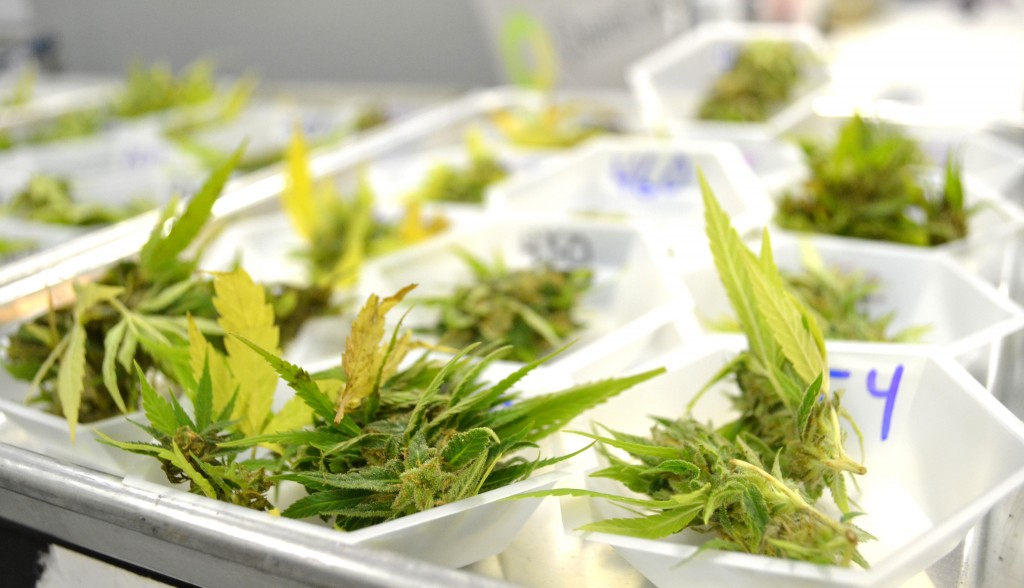
As published in the Journal of Leukocyte Biology by researchers at the University of South Carolina School of Medicine, the cannabinoid tetrahydrocannabinol (THC), which you probably know best as the psychoactive ingredient in marijuana, may help lengthen the time it takes for incompatible organs transplanted into a patient to be rejected.
To test their theory, researchers analyzed two groups of mice with markedly different genetic make-ups and transplanted skin from one group of mice onto the other group, and vice versa, to ensure that there would be a transplant rejection. One group was administered THC, while the control group was given a placebo. The results demonstrated that the mice given THC delayed the rejection of the skin graft longer than the control group by “reducing T-cell proliferation … and decreasing early stage rejection indicator cytokines.” Additionally, this improved the survival of the grafted skin despite its being incompatible.
One of the co-authors of the study, Dr. Mitzi Nagarkatti, had this to say:
We are excited to demonstrate for the first time that cannabinoid receptors play an important role in the prolongation of rejection of a foreign graft by suppressing the immune response in the recipient. This open up a new area of research that would lead to better approaches to prevent transplant rejection as well as to treat other inflammatory diseases.
Of course, as a word of caution, the researchers also note that this study was based on a mouse model, which offers no guarantee that the results would be replicated in larger animals or humans. It’s also worth pointing out that among drugs that work on animal subjects, 90% fail in human testing. Researchers concluded that additional testing would be the most prudent course of action.
Before You Get Your Hopes Up…
Although many tests of medical marijuana have shown encouraging results, don’t start lobbying to make the substance a panacea until you’ve considered a few other points.
First, marijuana isn’t always a successful therapy, according to pharmaceutical and university-based clinical studies. GW Pharmaceuticals, the leading researcher of cannabinoids from the cannabis plant, reported in January that its first of three clinical studies involving Sativex to treat advanced cancer pain didn’t meet statistical significance. To be fair, GW has also had a lot of early success with another cannabinoid-based experimental drug, Epidiolex, which has reduced the frequency of seizures in two rare forms of childhood-onset epilepsy by more than 50%. Still, the point is that pharmaceutical-based cannabinoid research is no guaranteed slam-dunk.
A recent study from the University of Minnesota School of Public Health also demonstrated that marijuana could actually be responsible for an increase in instances of prediabetes. To be clear, no correlation was made between marijuana and diabetes diagnoses (in fact, a prior study from a separate group of researchers suggested that marijuana actually helped lower blood sugar levels), but the University of Minnesota study did show that participants who used marijuana a lot in their adolescent years had a 40% higher chance of developing prediabetes by the time they reached middle age.
Further, the federal government currently seems adamant that marijuana remain a schedule 1 drug. President Obama, a number of presidential hopefuls, and many members of Congress are more than willing to see how the experiment of state-based regulation works within select states, and most want to see what sort of safety profile marijuana demonstrates in long-term clinical studies. However, we’re simply not there yet.
After decades of research examining the potential risks of marijuana, we’ve only recently witnessed a rise in the number of studies examining its benefits profile. This is a big puzzle that will take time to solve, and it’s unlikely marijuana will be a go-to therapy with your primary care provider or surgeon anytime soon.
In short, marijuana may one day unlock benefits for a broad scope of patients suffering from specific diseases, but we’re probably a long way from finding out whether the currently illegal drug is completely safe from a medical standpoint and whether Congress will act to change its stance on the drug. Until we have better clarity on both points, your best bet as an investor is to stay firmly planted on the sidelines.
News Moderator: Jacob Redmond 420 MAGAZINE ®
Full Article: Is Marijuana The New Organ Transplant Miracle Medicine?
Author: Sean Williams
Contact: Contact Page
Photo Credit: Steep Hill Labs, Inc
Website: The Motley Fool
Research Says Marijuana Is Not A Gateway Drug
Contradicting the common belief that weed is a gateway drug, a researcher has claimed that smoking pot does not necessarily cause addiction to other drugs.
While interacting with the people on Reddit, Psychiatrist Kevin Hill of the Harvard University said that early use of any of these substances (marijuana, alcohol, nicotine) increased the likelihood of future addiction.
Hill said that any use of such substances among young people should be taken seriously. However, added that early marijuana use did not mean that a child was doomed.
Currently, there is conflicting research over links between cannabis and subsequent addiction to harder drugs, such as cocaine or heroin.
The National Health Service of United Kingdom stated that most of the people who used harder drugs, like heroin had used cannabis, and only a small proportion of people who used cannabis go on using hard drugs.
On the other hand, it also states that buying cannabis brings you into contact with the illegal drugs trade, making it more likely that you will be exposed to other drugs.
According to a U.S. survey conducted in 2012, 60 percent of cannabis users do go on to try other drugs, however 88 per cent of drug users’ first drug was alcohol.
News Moderator: Jacob Redmond 420 MAGAZINE ®
Full Article: Marijuana May Not Be A Gateway Drug
Author: Web Staff
Contact: Contact Page
Photo Credit: Rich Pedroncelli / The Associated Press
Website: IBC World News