Colorado voters split on Proposition 122, which would legalize psilocybin
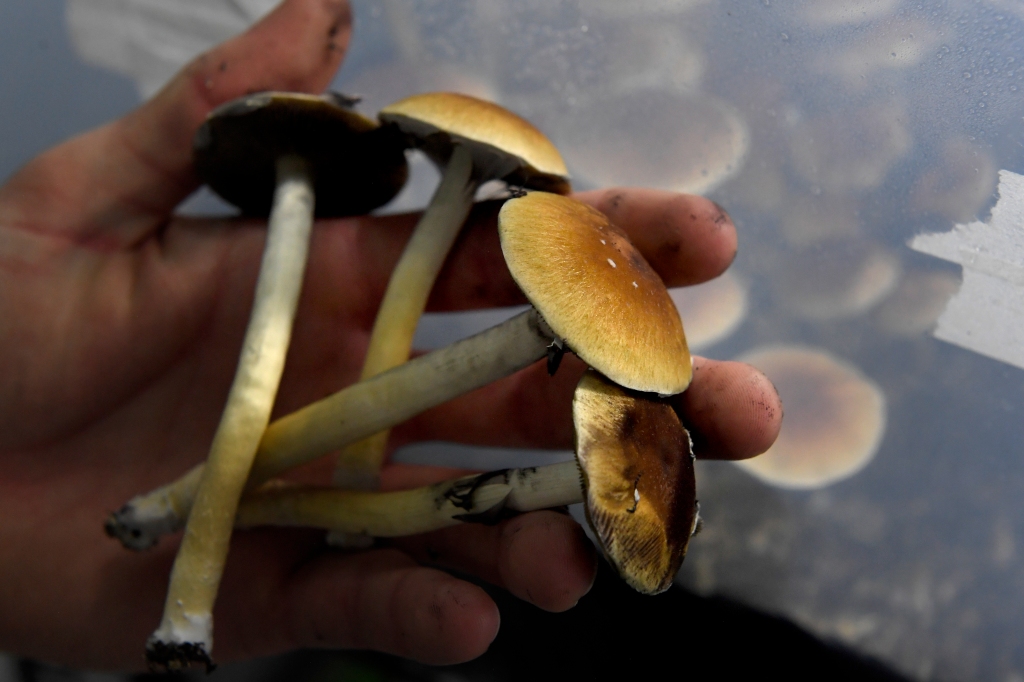
Colorado voters were split on a measure to legalize medicinal psychedelics while ballots were still being counted Tuesday night.
Proposition 122, Access to Natural Psychedelic Substances, was supported Tuesday with about 51% of the vote as of 10:23 p.m., according to polling tallies. That’s with about 46% of votes tallied, according to the Secretary of State, making the vote too close to call by press time.
According to Colorado law, a recount is triggered when a margin of victory in an election is less than or equal to 0.5% of the winner’s vote. The recount requirement applies to issue races as well as candidate races.
The measure seeks to legalize psilocybin and psilocin, two compounds found in “magic mushrooms,” for use in therapeutic settings and pave the way for the establishment of “healing centers” where adults 21 years old and up can use the substances under the supervision of licensed professionals.
Additionally, Proposition 122 would decriminalize the personal growing, use and sharing of psilocybin and psilocin, as well as ibogaine, mescaline and dimethyltryptamine, or DMT, for adults.
If it passes, Colorado would be the second U.S. state to legalize psychedelics for therapy behind Oregon, which did so in 2020.
Proposition 122 gives the Department of Regulatory Agencies (DORA) until January 2024 to develop licensing criteria for psychedelic treatment centers, facilitators, and ancillary businesses, in hopes it can begin accepting applications for these licenses later that year. By mid-2026, DORA could opt to expand the list of legal psychedelics to include ibogaine, mescaline, and DMT.
The effort to legalize psilocybin and psilocin, both Schedule I controlled substances, comes just three years after Denver became the first city in the U.S. to decriminalize psychedelic mushrooms. Last year, a panel tasked with evaluating the effects of decriminalization determined it “has not since presented any significant public health or safety risk in the city,” and suggested easing local laws further.
Still, the debate about whether or not to legalize proved contentious this election season. Proponents of Proposition 122 billed it as a potentially valuable tool to address the mental health needs of Coloradans. Psilocybin has shown promising results in treating depression, post-traumatic stress disorder, end-of-life anxiety, and nicotine and alcohol addiction in clinical studies.
However, opponents including the American Psychiatric Association argued the measure was outpacing science. In an open letter signed by politicians including Denver Mayor Michael Hancock, Aurora Mayor Mike Coffman, and Attorney General Phil Weiser, officials noted a lack of any approved therapies that use psychedelic mushrooms and scant scientific evidence that Prop 122 is good public policy.
Even some psychedelics advocates opted to vote against the initiative, stating they were suspicious of big money backing the campaign.
As of Nov. 2, Natural Medicine Colorado had raised $5.5 million. Three-quarters of that money came from two separate, but related groups – New Approach PAC and New Approach Advocacy Fund – with deep pockets and ties to high-profile American businesspeople. TOMS founder Blake Mycoskie, for example, contributed $1 million to the political action committee in support of Prop 122.

Kremlin: Any talks about Griner swap must be confidential Cannabis not made safer by increasing its CBD content, study finds
Comments are currently closed.