Medical Marijuana News
Veterans Lobby For Medical Marijuana In Washington D.C.
A Rockingham veteran took his fight for medical marijuana to the nation’s capital on Wednesday.
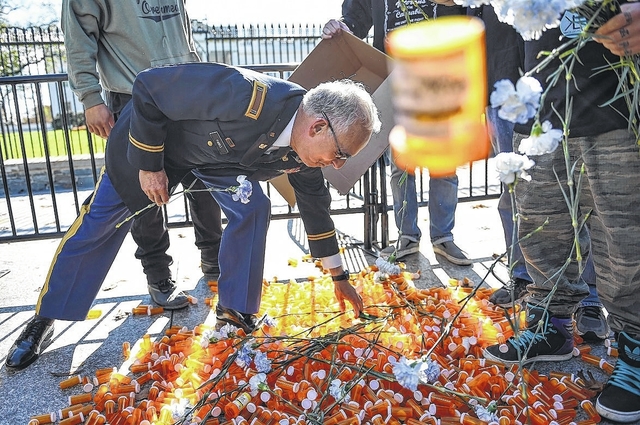
Perry Parks joined Weed for Warriors in dumping a box of empty pill bottles in front of the White House on Veterans Day “demanding equal care, and not by zip code.”
“The veterans are being filled with pills and basically killed,” Parks said by phone Thursday while visiting his daughter in New York. “We’re getting off the pills by using a natural plant.”
The group of veterans, which included a triple-amputee, made their way from the Veterans Affairs building in McPherson Square to 1600 Pennsylvania Ave., some smoking joints along the way, according to Parks. He said there were also cannabis-infused edibles on-site.
There are currently 23 states throughout the country — and the District of Columbia — that permit medical cannabis. In 2012, Washington and Colorado legalized recreational use for adults. Recreational marijuana was legalized in D.C. earlier this year.
“In the other 37 states, they’re still treated like criminals,” Parks said. “It’s immoral they keep doing this, man.”
A Marine veteran was arrested in 2014 on multiple felony charges when police found six plants after responding to a post-traumatic stress disorder episode, according to Truth in Media.
Kristoffer Lewandowski had been using the cannabis to treat his PTSD.
“He was taking 13 pills a day, and it was just killing his liver,” his wife, Whitney, told the online news outlet. “He was having all these issues with his body and he just wanted to try something more natural to just see if he could do without that many pills a day.”
Closer to home, Robert Dorr was arrested in 2013 after contacting the district attorney and sheriff’s office in Union County to let them know he was growing cannabis for his own personal medical use.
While North Carolina is not one of the 23 states, it is one of 11 states that allows the use of CBD oils for the treatment of seizures in children with epilepsy.
In recent years, legislators have quashed several attempts to bring the Tar Heel State into the fold, including this year.
Parks believes everyone should be able to receive treatment from the plant.
The U.S. Army veteran and Richmond County resident has been using cannabis to treat chronic pain since 2003 after retiring from the National Guard.
Prior to using cannabis, Parks was being treated with injections and pain pills.
“Whenever I retired from the military and started using cannabis, I was surprised it worked that well,” he the Daily Journal last summer. “When I look at the reduced harm to my body, to my organs…I’m going to continue to do this until I’m forced to stop. I will not go back to the pills that were slowly killing me.”
The Veterans Equal Access Act, introduced in the U.S. House of Representatives on Feb. 3, would authorize VA health providers to “provide veterans with recommendations and opinions regarding participation in their state’s marijuana programs.” The last action on the bill was when it was referred to the Veterans Affairs subcommittee on health on Feb. 13.
One related bill in the Senate — the “Compassionate Access, Research Expansion, and Respect States Act of 2015,” introduced by Sen. Cory Booker, D-New Jersey, and co-sponsored by Sens. Rand Paul, R-Kentucky, and Kirsten Gillibrand, D-New York — would reclassify “marihuana” from a Schedule I to a Schedule II controlled substance on the federal level.
In North Carolina, marijuana is a Schedule VI controlled substance.
The CARERS Act would also remove cannabidiol from the definition of “marihuana” and protect banks that provide financial services to legitimate marijuana-related businesses from federal prosecution.
Parks has gained nationwide attention for his activism in support of medical cannabis.
Earlier this year, he was featured in a recent Time magazine special — “Marijuana Goes Main Street” — and appeared on the page opposite comedian Tommy Chong.
“They’re trying to wake the American people up and say, ‘Hey, we were wrong,’” Parks said of the major magazines, including Time and National Geographic, which have published articles and editions on the benefits of the plant rather than demonizing it.
He was also mentioned in the book “Weed the People: The Future of Legal Marijuana in America” by Bruce Barcott.
In Chapter 8, “I Use it Before Church,” Barcott recalls meeting Parks at a drug policy conference in Denver in the fall of 2013.
“I have to tell you that hearing the word ‘bong’ coming out the mouth of a spit-shined Southern military man is like catching your grandmother rapping some Wu-Tang Clan,” Barcott wrote. “It’s a moment.”
News Moderator: Jacob Redmond 420 MAGAZINE ®
Full Article: Veterans Lobby For Medical Marijuana In Washington DC
Author: William R. Toler
Contact: Email The Author
Photo Credit: Richmond County Daily Journal
Website: Richmond County Daily Journal
Hundreds Apply To Handle Medical Marijuana In Maryland
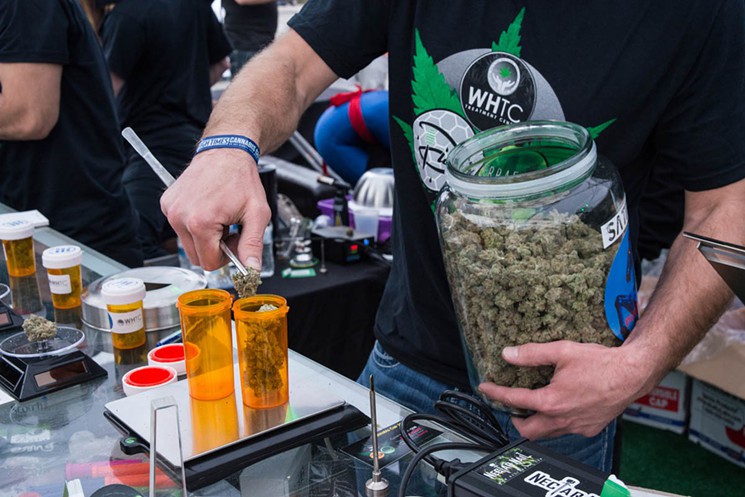
Hundreds of people are interested in growing, processing and dispensing medical marijuana in Maryland.
The state Medical Cannabis Commission confirmed Friday that it has processed 355 applications. They said there are still more applications that have yet to be processed.
So far, the commission has counted 50 applications for growers, 36 for processors and 269 for dispensing.
The commission said it received applications from every county in the state.
An update on final numbers is expected next week.
News Moderator: Jacob Redmond 420 MAGAZINE ®
Full Article: Hundreds Apply To Handle Medical Marijuana In Maryland
Author: Web Staff
Contact: Contact WBAL
Photo Credit: Timothy Norris
Website: WBAL TV
Florida: Medical Marijuana Law Misses Deadline, Nearly A Year Behind Schedule
Almost a year-and-a-half since Gov. Rick Scott and state lawmakers legalized a form of medical marijuana, the latest deadline for making it available to Floridians has gone up in smoke.
Again.
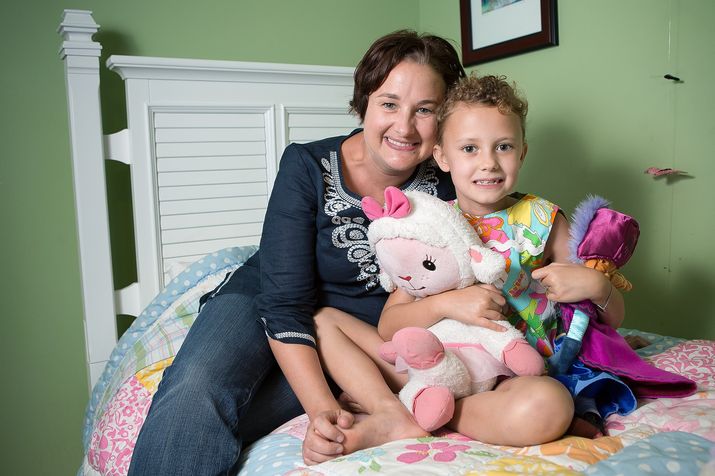
“I have gotten so very angry,” said Ava Pence, a Palm Beach Gardens teacher whose 9-year-old daughter, Meredith, suffers from Dravet syndrome, a severe epilepsy.
“It just feels like it’s been a terrible betrayal. We once thought we were going to be taken care of,” she said. “Now, we just don’t know.”
Cancer patients, as well as those suffering seizures as Pence’s daughter does, were supposed to be able to obtain a non-euphoric marijuana oil dubbed Charlotte’s Web beginning Jan. 1, 2015. But crafting regulations for a new Florida marijuana industry has stalled the introduction.
Activists are frustrated, new legislative proposals are in play, and another effort to ask voters to approve full-blown marijuana for medical use is underway and aimed at next November’s presidential ballot in Florida.
“Every week that goes by that this substance is not in the hands of these suffering families is one week too long,” said Sen. Rob Bradley, R-Fleming Island, a sponsor of last year’s Charlotte’s Web bill. “I continue to be very, very frustrated.”
In a crucial step in the complicated and combative start-up process, the Florida Department of Health is finally close to selecting five nurseries to grow, process and dispense Charlotte’s Web.
The 2014 law divided the state into five regions, with one licensee in each. Officials are now sorting through thousands of pages of information submitted by 28 nurseries who have applied across Florida to become one of the five licensees with exclusive rights to sell the medical marijuana.
But an October goal for selecting the five nurseries has been dashed.
And now some advocates say it could be at least Thanksgiving before the selection hurdle is cleared — and well into 2016 before patients under a doctor’s orders could begin lining up for the product.
The oil is low in tetrahydrocannabinol, or THC — which gives marijuana its psychoactive quality — but high in cannabadiol, or CBD, which research shows eases convulsions, inflammation, anxiety and nausea.
Mara Gambineri, a Health Department spokesman, told The Palm Beach Post that officials have pledged to state lawmakers that licenses would be issued this fall.
“The department remains committed to getting this product to children with intractable epilepsy and people with advanced cancer as safely and quickly as possible,” she said.
But even if licenses are granted, there will likely be challenges from those nurseries not chosen, said many of those involved in the regulatory battle.
Although the deadline for nurseries to apply was July 8, DOH sent letters to applicants seeking additional information to flesh out applications, which usually spanned more than 1,000 pages each.
The way those letters were issued gave some applicants an additional chance to correct any failings, and arguably extended their deadline, critics said.
In a process already plagued by lawsuits and rules challenges, some say this will only invite more.
“I think every nursery that loses in the application process will challenge. But they’re going to have to have a substantive claim,” said Louis Rotundo, lobbyist for the Florida Medical Cannabis Association and a part owner of one of the applicants in the northwest region.
The 2014 law makes eligible only Florida nurseries in business for 30 years with more than 400,000 plants on their premises.
The five nurseries seeking to land the license for the Southeast region, which includes Palm Beach County, are in Homestead and south Miami-Dade County.
Meanwhile, Ohio voters are set to vote Tuesday on a marijuana referendum similar to Florida’s law in that would give 10 facilities exclusive commercial marijuana rights in that state. But that voter initiative is very different in that it would make Ohio the first state in the nation to legalize marijuana without first having a medical marijuana law.
Laws supporting cannabis for medical treatments already exist in 23 states and the District of Columbia.
The possibility that Florida voters may take another shot at legalizing full-blown medical marijuana for much broader purposes in another referendum of its own in 2016 makes getting one of the first Florida licenses even more critical for nurseries and their investors. Nurseries producing Charlotte’s Web are likely to transition easily into growing conventional marijuana.
“I’m sure some are looking at it that way,” said Brian Ballard, a Tallahassee lobbyist and Republican fund-raiser with an ownership share and representing three nursery applicants in three different regions.
Ballard is among several Capitol lobbyists with a stake in the new venture.
Last fall, a medical marijuana campaign backed by $5 million spent by Orlando trial lawyer John Morgan narrowly failed to win approval from voters. It drew 58 percent support, when 60 percent was needed for the constitutional amendment.
Morgan has tinkered with the ballot language and is gathering petition signatures to get it on next year’s ballot. A larger turnout is certain with the measure potentially sharing ballot space with the presidential contest.
Supreme Court justices are set to hear arguments in December on the language of the latest ballot proposal.
On the state’s problems launching Charlotte’s Web, Ben Pollara head of United for Care, the ballot campaign, said, “We can only hope that this has been kind of a dry run for us.”
But Holley Moseley, a Gulf Breeze woman who led a group of families with sick children, lobbying and prodding legislators to approve the Charlotte’s Web bill last year, acknowledged many feel forgotten amid the regulatory entanglement.
“Maybe I’m naïve, but I feel the support from legislators last year was very genuine,” said Moseley, whose daughter, RayAnn, 12, has cerebral palsy and severe epilepsy.
“It can be discouraging. But then I think we are so close. And we have come so far,” she added.
Pence, the Palm Beach Gardens mother, said it has been a discouraging journey.
“There’s something out there that can help your child, but we’re being held back,” Pence said. “That’s very difficult.”
News Moderator: Jacob Redmond 420 MAGAZINE ®
Full Article: Medical Marijuana Law Misses Deadline, Nearly A Year Behind Schedule
Author: John Kennedy
Contact: Feedback Page
Photo Credit: Madeline Gray
Website: My Palm Beach Post
Maryland’s Medical Marijuana Industry Taking Shape
A 152,000-square-foot warehouse in Cumberland, Md., could soon be the home of some of Maryland’s first legally produced medical marijuana. To address security concerns, Peak Harvest Health says it will install bullet-proof glass and retinal scanners to identify those entering the building. Employees will wear color-coded uniforms confirming where they are allowed to be.
By late 2016, if approved by state regulators, the windowless building next door to a police station could be churning out up to 18 pounds of marijuana a day, enough to treat thousands of patients a month.
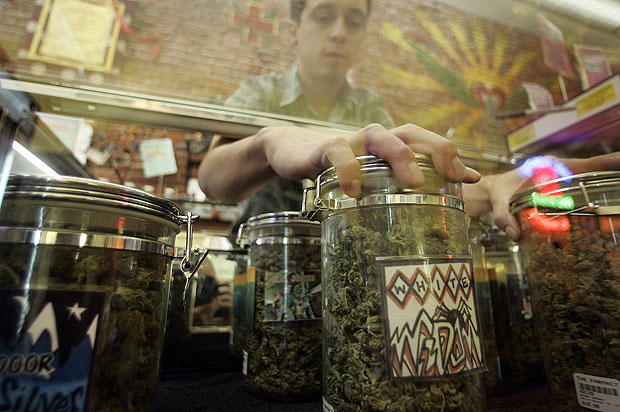
A year after Maryland legalized marijuana for medicinal use, the seeds of an industry are beginning to form. Experienced marijuana growers from across the country have begun piling into the state to compete for $165,000 a year in state-issued licenses to grow medical-grade pot.
The Maryland Medical Cannibas Commission, which regulates growers, said it expects to give out up to 15 licenses by late 2015 or early 2016. But at least 60 companies are likely to apply for a license, according to the Maryland Cannabis Industry Association. The market could quickly become oversaturated, industry insiders say.
“Some of the most successful entrepreneurs in Maryland have their eye on this opportunity,” said Rachelle Yeung, government affairs manager at Denver-based Vicente Sederberg, which is helping some companies wade through Maryland’s approval process. “And medical cannabis providers from other very competitive states are looking to operate [in Maryland] as well.”
Gaithersburg-based Green Leaf Medical has signed a lease for a 42,000 square-foot warehouse in Frederick County after collecting nearly $1 million from investors. The company has packed its board with PhDs, including pharmacologist Vincent Njar and agronomist Marla McIntosh of the University of Maryland. Frederick Police Department veteran Tom Chase will advise the company on security issues.
But locally based firms will face stiff competition from out-of-state growers.
At least two New York-based companies — Citiva Medical and Alternative Medicine Associates, which has established a Maryland subsidiary — were not approved to set up operations in their home state and are vying for a license in Maryland.
“If you look at the state of Maryland, you’re not supposed to know how to grow marijuana on a massive scale, so you have to look outside the state for people with the right credentials,” said John Pica, a former state senator from Baltimore who is helping Alternative Medicine Associates with its application.
Green Thumb Industries, a Chicago-based company that won three cultivation licenses in its home state, is also applying for a Maryland license. The company said it received county commissioners’ endorsement to produce medical marijuana in Hagerstown.
Regulators will consider whether the companies have Maryland residents in their executive ranks or among their investors during the approval process.
Cumberland-based Peak Harvest Health, which has raised $12 million from investors, is filling its ranks with well-known local executives and is aggressively courting Maryland-based investors.
When Maryland legalized medical marijuana, Ethan Ruby, a former private-equity trader and the company’s co-founder, partnered with Kevin Gibbs, a District native who spent 10 years with the L.A. Dodgers and the New York Yankees, and Peter Kirsch, a local real estate executive.
Ruby became a medical marijuana activist after a car ran a red light while he was crossing a Manhattan street and slammed into another vehicle, colliding with Ruby and leaving him paralyzed from the waist down.
Years later the injury was still painful, Ruby said, and a friend suggested he try medical marijuana.
“Most people’s experience is just recreational in college, but I thought this could be really beneficial,” he said.
Ruby said he spent the better part of the next decade learning everything he could about the marijuana industry, moving his family in 2010 to Colorado, where he secured an apprenticeship at a distribution center and learned the mechanics of growing and processing medical marijuana products.
By 2014, he had set up a 64,000 square-foot production facility in Watertown, Conn. He also co-founded LeafLine Labs, which operates a 42,000 square-foot facility in Cottage Grove, Minn.
Last year, Ruby and his team approached members of the Cumberland City Council and brought two city officials to Connecticut to tour a Theraplant facility there. Eighteen months later, Cumberland’s City Council passed a resolution expressing its “exclusive support” for the company’s application.
If the company’s license is approved by state regulators, a team of 30 to 35 employees would grow the plants in a Riverside Industrial Park warehouse and infuse the cannabis into the pills, syringes and patches that are becoming become the norm for the industry. Peak Harvest Health says it will initially use only about a third of the 152,000 square-foot facility.
It’s unclear how large the marijuana market in Maryland could become or how quickly it could materialize. But Hannah Byron, executive director of the Maryland Medical Cannabis Commission, said that Arizona may be a model for what may happen here; the two states have similar population sizes. Market research firm Arcview estimates that Arizona’s medical marijuana market grew from $35 million in 2013 to $155 million in 2014, the fastest growth of any state.
But some say investors and growers are jumping the gun in Maryland.
“There are too many people playing in the market at the beginning,” said Doug Butdorf, chief executive of North Country Roots, a company that failed to win a grower’s license in New York. “I think Maryland is trying to bite off more than it can chew in the short term.”
Maryland “is seen as a market that’s exciting and there’s opportunity there, but it’s going to be costly and you’ll see people drop off pretty quickly,” he said.
Maryland’s cap of 15 grower licenses is more restrictive than places such as Colorado — which has no limit — but looser than Minnesota and New York, which limit the number of growers to two and five, respectively.
Butdorf said his company is passing on Maryland, at least for now, because he thinks there will be too many suppliers at the outset.
“There will be a lot of people losing money,” he said, “a lot of people going out of business in the first year.”
News Moderator: Jacob Redmond 420 MAGAZINE ®
Full Article: Maryland’s Medical Marijuana Industry Taking Shape
Author: Aaron Gregg
Contact: Contact The WP
Photo Credit: None Found
Website: The Washington Post
Oregon: City To Keep Ban On Recreational Stores But Votes To Approve MMJ Dispensaries
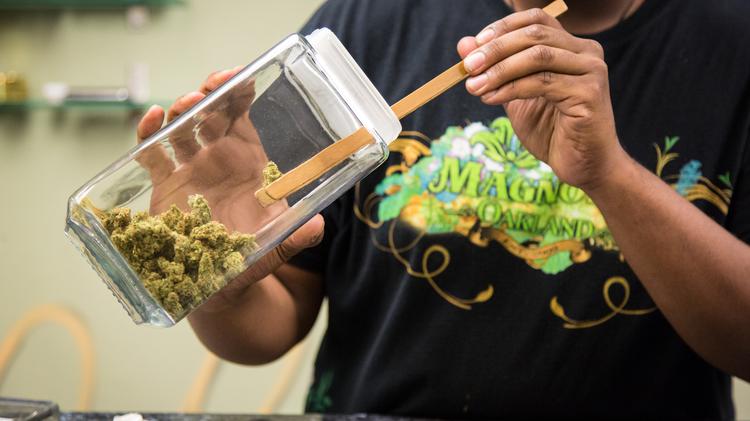
In a 7 to 1 vote, the Medford City Council votes to allow medical marijuana dispensaries in Medford to open but there are restrictions.
The sale of recreational marijuana will remained banned within the city and even though it has been approved, the plan could still be thrown out later this month.
Starting December 1st of this year, city rules will change allowing medical marijuana to be sold but not recreational.
“Council decided to let the voters decide if they want to allow it in their community in the general election next year,” explained Clay Bearnson, Medford City Councilor.
Bearnson has been open about his stance in favor of marijuana and says he plans on applying for a dispensary license.
“I’ve been a medical marijuana patient and cardholder for 10 years, I’ve grown for people,Ii’ve grown for sick people who are no longer with us. And it’s something I feel is it has it’s benefits to peoples ailments. And it’s something I’ve been behind since day one,” he said.
City councilors and the city planning commission have been working together on local marijuana laws for laboratories, processors, and wholesalers for the past several months.
But not everyone is happy with the decision. City councilor Tim Jackle is the only one who voted against the revised ordinance. He did not return NBC5’s phone calls for comment.
Medford Mayor Gary Wheeler has 10 days to veto the council’s decision. No word if he will.
News Moderator: Jacob Redmond 420 MAGAZINE ®
Full Article: City To Keep Ban On Recreational Stores But Votes To Approve MMJ Dispensaries
Author: Kyle Aevermann
Contact: Contact KOBI5
Photo Credit: Magnolia Wellness
Website: KOBI5 News
California: Governor Approves Medical Marijuana Bills
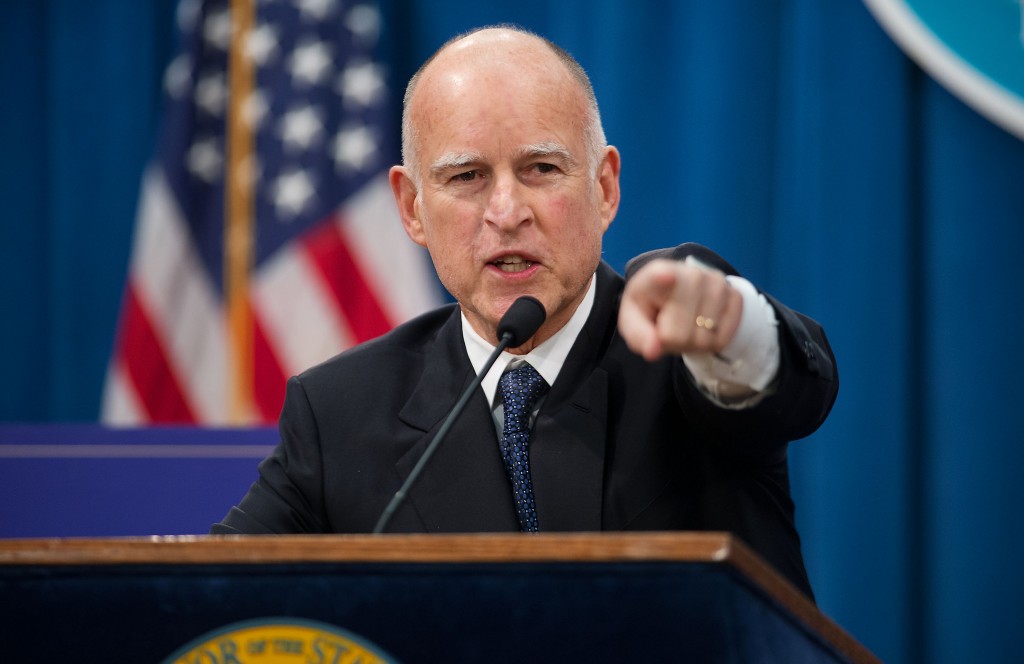
A trio of bills aimed at bringing order and oversight to California’s medical marijuana industry nearly 20 years after the state led the nation in legalizing pot for medical use won Gov. Jerry Brown’s signature, his office said Friday.
The first statewide licensing and operating rules for pot growers, manufacturers of cannabis-infused products and retail weed stores comes as multiple groups try to qualify voter initiatives for next year that would allow adults to use marijuana recreationally.
Even before Brown approved the package of new rules, initiative sponsors had started rewriting their proposed measures to incorporate many of its elements.
“Today, the Wild West era of medical cannabis came to an end, and a new era of responsible regulation has begun,” said United Food and Commercial Workers Western States Council Executive Director Jim Araby, whose union lobbied for employment standards in the bills. “Voters are poised to decide on legalizing recreational cannabis in 2016, so it was vitally important that California establish a regulatory framework first.”
The Democratic governor’s endorsement of the 70-page Medical Marijuana Regulation and Safety Act hammered out by lawmakers in the closing hours of the legislative session was expected because his office crafted many of the exhaustive details.
“This new structure will make sure patients have access to medical marijuana, while ensuring a robust tracking system,” Brown said in a signing statement. “This sends a clear signal to our federal counterparts that California is implementing robust controls not only on paper, but in practice.”
The package seeks to manage medical marijuana by requiring individuals or companies engaged in any aspect of the industry to obtain at least one of 17 different licenses. It restricts the number of licenses one company could have.
The legislation includes separate licenses for indoor and outdoor cultivation, transportation, product testing, distribution and dispensaries of different sizes. It also charges various state agencies to develop guidelines for packaging, potency, pesticide use and advertising.
In addition, the bills preserve the right of individuals to grow small amounts of medical marijuana for personal use and allows local governments to ban or tax marijuana-related businesses. Another provision commissions the University of California to study how marijuana affects driving and to recommend appropriate impaired-driver standards.
“This package proves that, for the first time, Californians can work collaboratively to develop and produce comprehensive medical marijuana regulation,” said California Police Chiefs Association President Chief David Bejarano, whose organization opposed previous efforts to regulate medical marijuana at the state level on the theory that to do so would amount to an endorsement that pot has proven benefits.
The state is expected to start issuing licenses to medical marijuana suppliers and distributors in 2018. But Brown said state agencies given responsibility for enforcing the new laws would immediately start working on fleshing out procedures left unaddressed in the bills.
The legislation includes: AB266 by Assemblyman Rob Bonta, D-Oakland, which sets up a medical marijuana bureau; AB243 by Assemblyman Jim Wood, D-Healdsburg, which allows the state to issue licenses to pay for oversight; and SB643 by Sen. Mike McGuire, D-Healdsburg, which cracks down on clinics that specialize in issuing medical marijuana licenses for people without valid health needs.
The American Medical Marijuana Association, an advocacy group for medical marijuana patients, has said it plans to sue to overturn the legislation.
The group says that several parts of the bill, including a provision limiting the space in which someone can grow their own pot to 10-feet by 10-feet, illegally amends the 1996 voter initiative that legalized it.
News Moderator: Jacob Redmond 420 MAGAZINE ®
Full Article: California Governor Approves Medical Marijuana Bills
Author: Lisa Leff
Contact: ABC News Feedback
Photo Credit: Randall Benton
Website: ABC News
Florida Makes Final Preparations For Growing And Dispensing Medical Marijuana
Rod Hollingsworth Jr. came of age watching his father and grandfather grow orchids in this community of sprawling farms and… [Read More]
Parents Say Medical Marijuana Allowed Their Son To Live Life To The Fullest
A Mesa couple says medical marijuana gave their young son the opportunity “to become who he was.”
Jacob and Jennifer… [Read More]
California: Cities Given Leeway In Crafting Medical Marijuana Laws
New legislation that would create California’s first comprehensive attempt to regulate the medical marijuana industry would give Long Beach and… [Read More]
Indiana: Mothers Fighting The System For Medical Marijuana
After a neurologist told Shirley Nelson that a banned oil extracted from marijuana plants might help her son find relief… [Read More]